ACMER
ACMER S2 20W Laser Engraver with Air Assist
Powder-coated tumblers on a roller rotary, names and logos on wood, leather and coated metal
Food-grade mineral oil to soak the board, then a beeswax cream to seal it — the standard two-step finish for a cutting board.
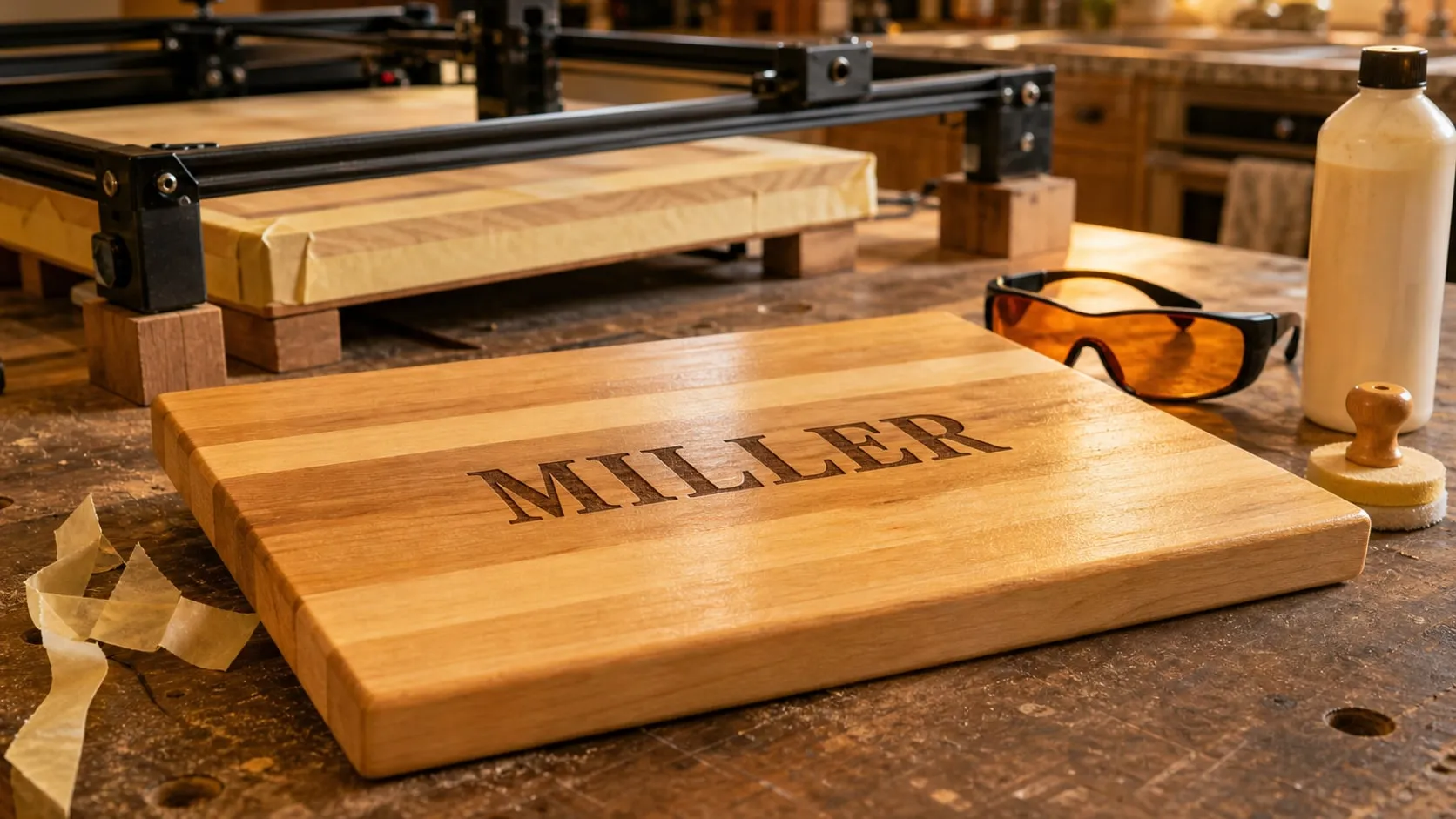
Laser engraving leaves bare, dry wood where the design is, and the paper mask and a bit of sanding remove some of the factory finish around it. Before the board goes in a gift box, or near food, it needs oil again. Mineral oil is the standard: it’s food-safe, it doesn’t go rancid like cooking oils, and it soaks into the engraved letters as well as the flat face.
The cream is the second step. The beeswax stays near the surface and slows down how fast water gets in, which is what keeps a board from drying out and cracking. Two products, two steps, and the board looks finished.
Pro tip Oil the engraving first and let it soak in while the rest of the board gets its coat. The burned wood is drier than the face around it and drinks more; a second dab on the letters gives them an even, deep brown instead of patches.
Why we like it
Keep in mind
As an Amazon Associate I earn from qualifying purchases. If you buy through a link on this page we may earn a small commission, at no extra cost to you. How this works.
ACMER
Powder-coated tumblers on a roller rotary, names and logos on wood, leather and coated metal
Artliving
Displaying engraved coasters and small plaques, finishing the gift
ATOMSTACK
Cutting wood and acrylic on a diode laser that has an air-assist nozzle, cleaner engraving on wood
Brilliance Laser Inks
Bare or brushed stainless tumblers, flasks and tags on a diode or CO2 laser